Custom hand fans are one of the few event favors that guests actually use in the moment, which is exactly why a bad order is so visible. If they run out, the wrong size, or wilt in the heat, everyone notices during the ceremony. Most of the trouble traces back to a handful of predictable mistakes, and each one is easy to avoid once you know to look for it.
Ordering exactly to the headcount
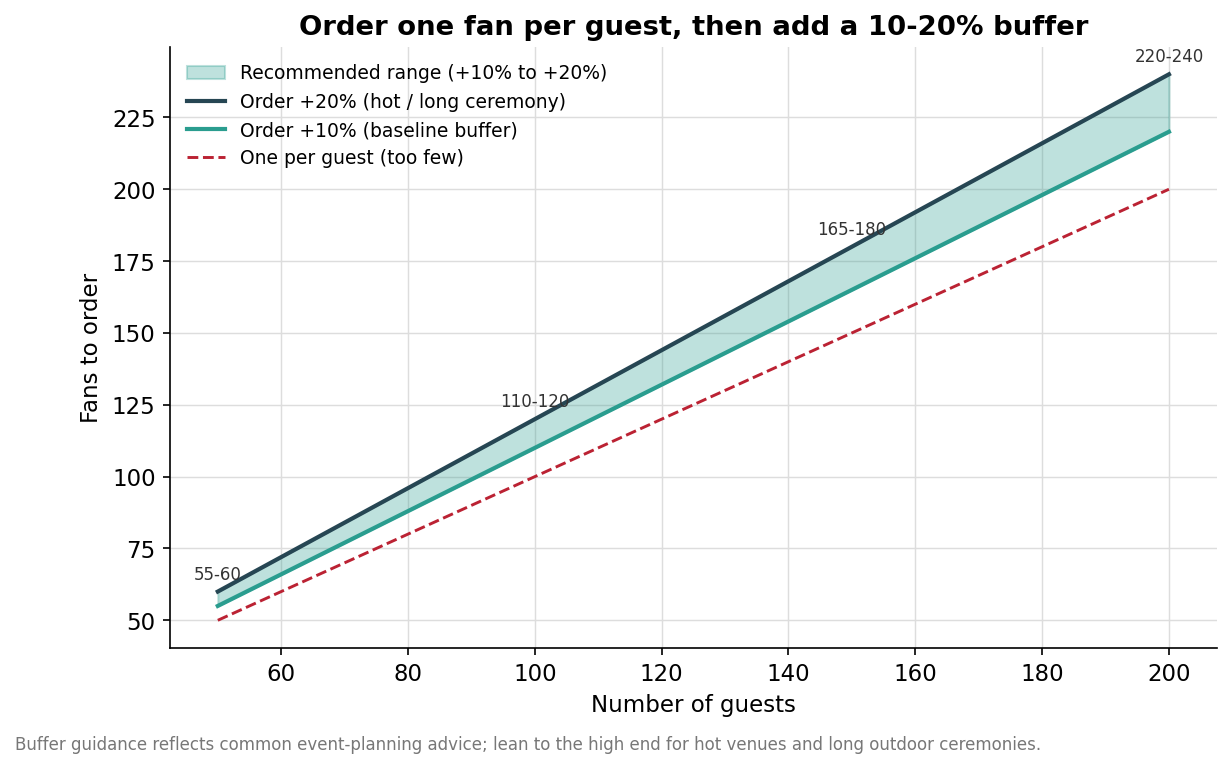
The most common miscalculation is buying one fan per guest and stopping there. In practice you want one per guest plus a 10 to 20 percent buffer, because guests misplace them, bring an unlisted plus-one, or pick up a second, and because leftover fans work as reception-table favors or a welcome-table display. That means a 50-guest wedding orders roughly 55 to 60, a 100-guest event orders 110 to 120, and a 150-guest ceremony orders 165 to 180. Lean toward the top of that range for hot destinations, afternoon start times, and long outdoor ceremonies, where a single fan per person genuinely is not enough to keep the crowd comfortable.
Picking a size that looks right in photos but barely moves air
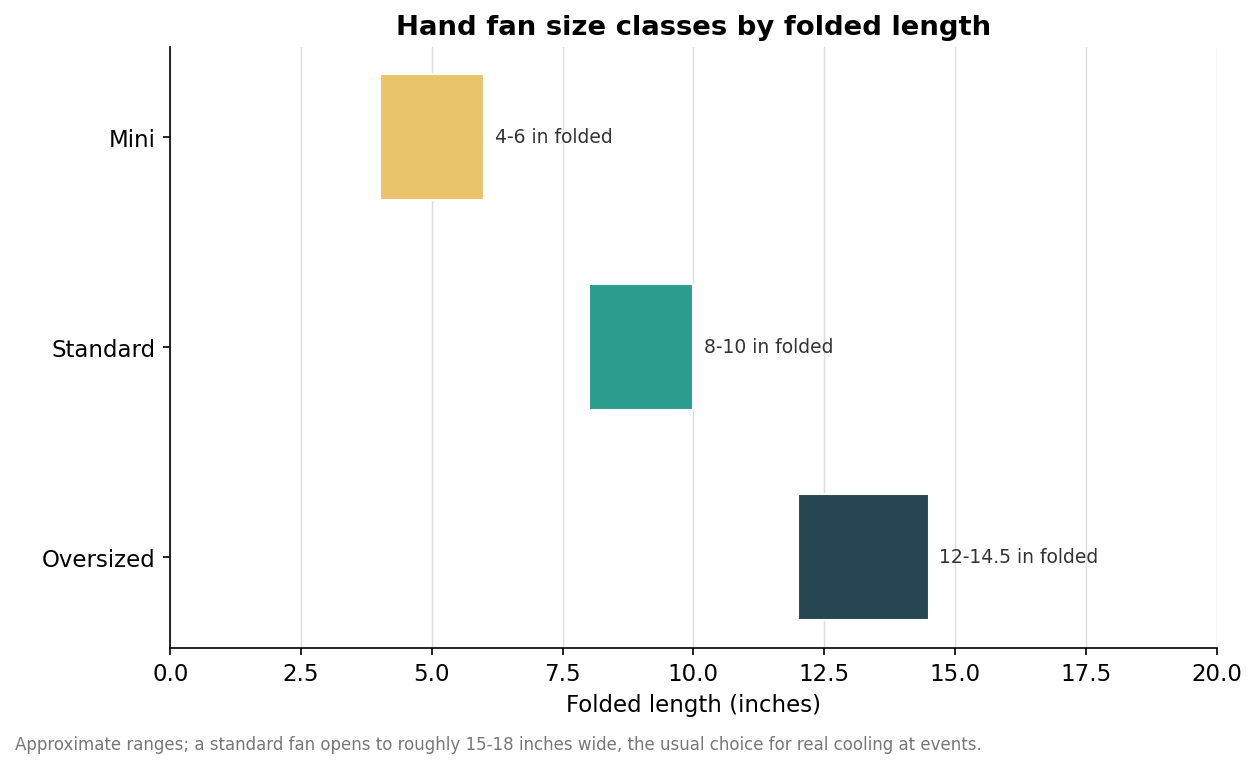
Fans come in distinct size classes, and the pretty mini fans that photograph well are often too small to cool anyone. Mini fans fold down under about six inches and are really a decorative or keepsake choice. Standard fans, the usual event pick, fold to roughly eight to ten inches and open to about 15 to 18 inches wide, which is the span that actually pushes enough air to matter. Oversized fans fold at over twelve inches and make a dramatic statement but are bulkier to hand out and store. If the job is keeping guests comfortable through a summer ceremony, order the standard size and treat the mini as a favor rather than a cooling tool.
Choosing the material for the look instead of the venue
All of these are sold loosely as bamboo fans, but the leaf and frame materials behave very differently once the weather gets involved. Bamboo frames are lightweight, strong, and forgiving. Sandalwood and other woods add a luxurious feel and, in the case of sandalwood, a faint scent, at a higher price. The bigger decision is the leaf: silk looks elegant and holds up, while paper and cotton are affordable and breathable but far more vulnerable to humidity, sweat, and an accidental drink spill at an outdoor reception. For a beach or garden event in July, a fabric or solid bamboo-slat fan will survive the day in a way a paper-leaf fan often will not, so match the material to the conditions the fan has to endure, not just the color palette. Weight is part of this too: a heavier sandalwood fan feels premium on a gift table but is less pleasant to wave for an hour, while a light bamboo-and-fabric fan is the easier everyday tool. If the fan is meant to be used continuously through a ceremony rather than admired and set down, err toward the lighter, more durable combination.
Assuming every bamboo fan is the same quality
Two fans can carry the same description and the same logo and still feel completely different in the hand. Low-grade fans use thin material and rough wood, show uneven folds, and can tear or bind at the hinge. Mid-range fans use decent bamboo or basic wood with functional hinges and hold up fine for a single event. High-quality fans, in premium woods or silk, open smoothly, make little noise, and keep their shape after repeated use. The tells are worth checking on a sample before you commit a few hundred units: run the fan open and closed several times and listen for grinding, look at whether the folds are even, and see whether it holds its spread instead of drooping. A cheap fan that jams on the first open is a poor advertisement in a guest’s hand.
Leaving artwork and timing to the last minute
Because these are custom-printed, the order is not just a quantity, it is a design that has to be proofed and produced. The recurring mistake is treating them like an off-the-shelf favor and ordering days before the event. Build in time to approve a printed proof, and remember that wedding and event season concentrates demand in the warm months, when both production and shipping slow down under load. Order well ahead rather than at the last minute, confirm the print method suits your artwork, whether a simple one or two color logo or a full-color photographic design, and lock the final art early so a proofing round does not eat your remaining runway. The exact production window varies by supplier and season, so treat it as weeks, not days, and give yourself margin. A useful habit is to place the order once your guest count is roughly firm rather than waiting for the final number, then apply the buffer on top; the small risk of ordering a few extra fans is far cheaper than paying for rushed production or expedited shipping to hit the date. If your artwork is not ready when you are, lock in the quantity and fan style first and finalize the design during the proofing window rather than letting an unfinished logo hold up the whole order.
None of these mistakes is exotic, which is the point: a good hand fan order is mostly a matter of ordering a sensible buffer over your headcount, choosing the standard size for real cooling, matching the material to the venue and weather, checking a sample for build quality, and starting early enough that the printing and shipping have room to breathe. Handle those five, and the fans do what they are supposed to, which is keep a crowd cool and put your design in every hand in the room.