Hand fans are one of the few wedding favors that guests actually use in the moment, which is exactly why the wrong style disappoints. A delicate silk fan handed out at a rowdy outdoor reception gets crushed; a flimsy paper fan at a formal evening gala looks cheap; a fan that is beautiful but arrives after the wedding is no fan at all. The style you choose has to answer three practical questions at once: how big it should be, what it should be made of, and how long it takes to produce. This guide compares the main custom fan styles against those questions so you can match the fan to the event rather than the other way around.
Match the fan to the event, not the other way around
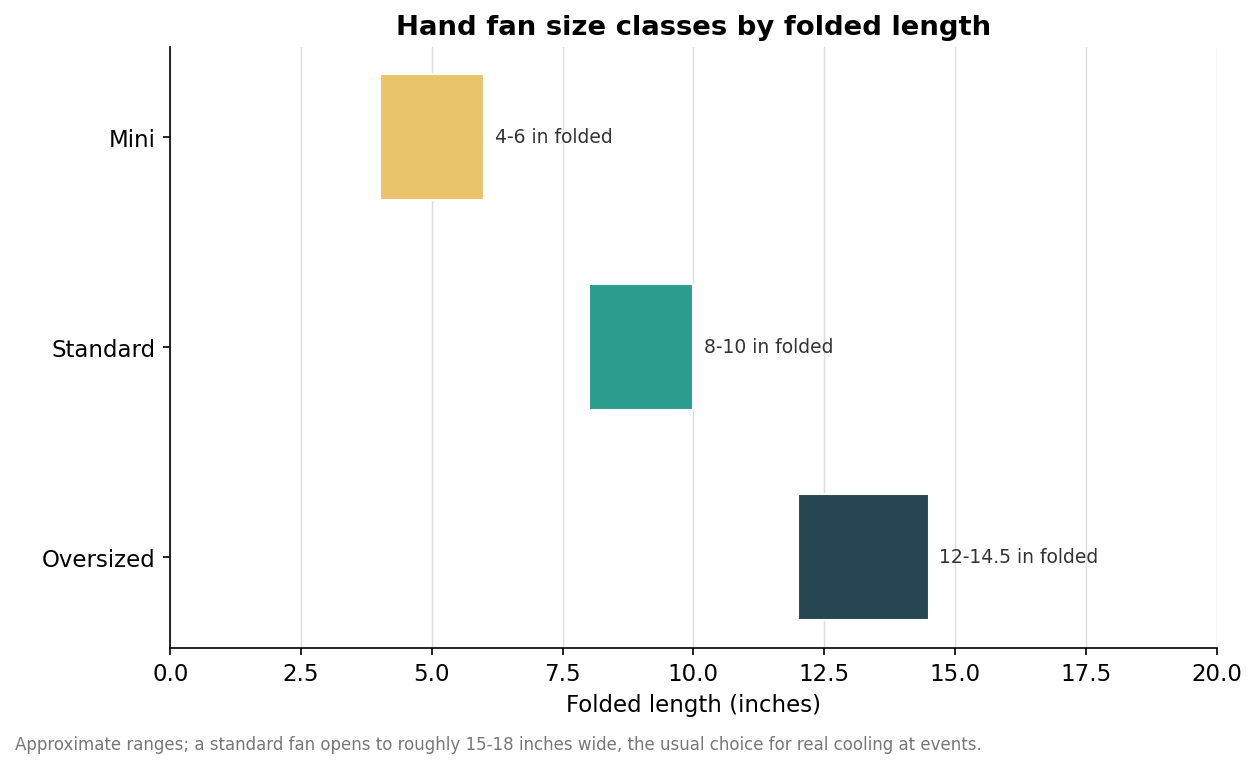
Size is the first decision, and it is more consequential than it looks. Folding fans fall into rough classes by their folded length: mini fans under about 6 inches, standard fans at 8 to 10 inches, and oversized fans past 12 inches. A standard fan opens to a span of roughly 15 to 18 inches, which is the sweet spot for actually moving air without being unwieldy in a guest’s hand or a photograph. Mini fans photograph sweetly and tuck into a favor box, but they push very little air; oversized fans make a statement and cool effectively but cost more and can overwhelm a place setting. For most weddings the standard 8-to-10-inch folding fan is the safe center of the range, and the material choice is where the real personality lives.
Paper and paddle fans: the budget program fan
Paper and paddle fans are the workhorses of the ceremony. Built from cardstock or kraft paper on a wooden or bamboo stick, they run roughly $1.50 to $7.00 each, with most landing in the $2.00 to $3.50 range, and they turn around fast, on the order of 10 to 14 business days with rush options as short as 5 to 7 days. Their signature advantage is that a flat paper or paddle fan doubles as the printed program, folding the ceremony order and the cooling tool into one item and eliminating a separate line on the stationery budget. The trade-off is that guests tend to leave them on the chairs; take-home rates are low, so they are the wrong pick if you want the favor to travel home as a keepsake. For a short ceremony, a tight timeline, or a large guest count on a budget, paper is hard to beat.
Bamboo-and-fabric folding fans: the keepsake
A fabric leaf on bamboo or sandalwood ribs is the fan people actually keep. Silk, satin and quality synthetic leaves on bamboo ribs run roughly $8 to $28 each and read as a genuine gift rather than a giveaway, which is why their take-home rate is high. Bamboo is the reason these fans work as well as they look: it is light, strong and renewable, so the ribs stay crisp through repeated opening and closing without adding weight. The cost of that quality is time. Domestic production typically runs 3 to 5 weeks, and anything with custom embroidery or wholesale sourcing can stretch to 10 to 12 weeks, so this is a style you commit to early.
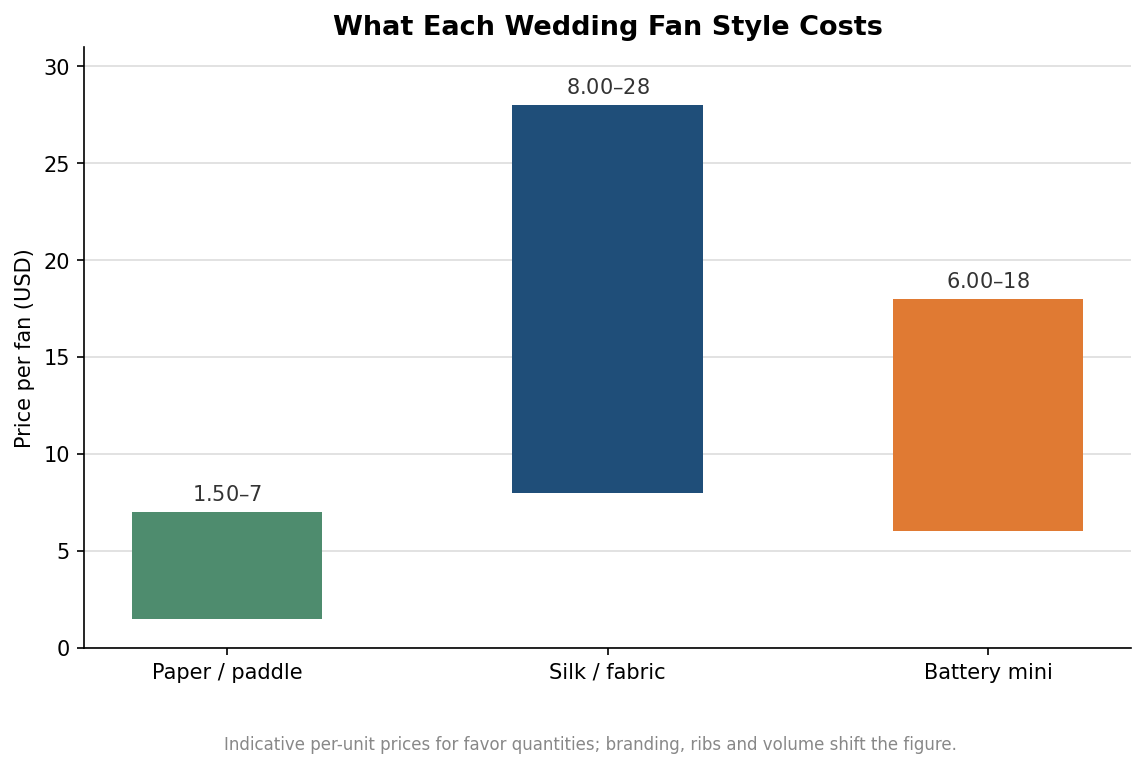
The price spread above is the clearest way to see the choice: paper competes on cost and speed, fabric competes on keepsake value, and the two rarely substitute for each other. If the goal is for a guest to open a drawer months later and remember the day, the bamboo-and-fabric folding fan is the one that earns its higher price.
Sandalwood, and when a battery fan wins
Sandalwood and specialty leaves are the luxury tier. Wooden fans, often carved in an openwork pattern, add a tactile, elevated feel, and sandalwood in particular carries a subtle natural fragrance that guests notice and remember. Lace and hand-painted leaves sit in the same premium band and suit vintage or black-tie aesthetics. These are keepsakes first and cooling tools second, and like fabric fans they need a comfortable runway before the event.
Sometimes the honest answer is not a traditional fan at all. For a long ceremony in real heat, a folding fan is symbolic relief; a small battery-powered fan is literal moving air. Plastic mini fans run roughly $6 to $18, with branding adding about $1 to $3, deliver 4 to 8 hours of runtime, and are the sensible call for a ceremony running past about 75 minutes in temperatures above 90 degrees. They lack the charm of bamboo and paper, but a guest who is genuinely overheating will value function over romance, and battery fans produce quickly, usually within 2 to 3 weeks.
Timing decides as much as taste
Your calendar quietly eliminates options before your taste ever gets a vote. The lead times differ enough that the date on the invitation often makes the decision for you.
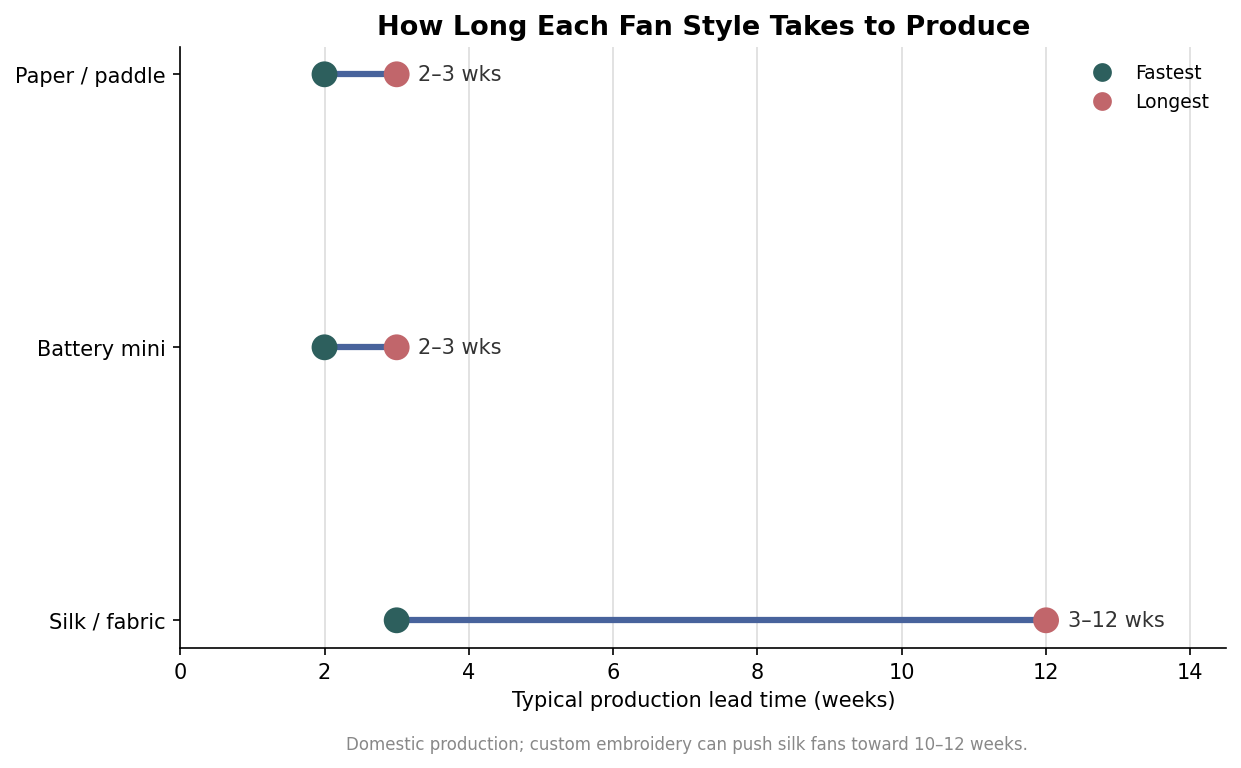
Read practically, that means silk and sandalwood fans need to be ordered with real runway, ideally 90 days or more, while paper and battery fans remain reliable well inside a six-week window and paper alone is the dependable choice under about 30 days for a customized quantity. If you are early, every style is on the table and taste can lead; if you are late, let the timeline pick the material and put your creativity into the print instead.
Put the three questions together and the choice usually makes itself. Decide the size for how the fan will be held and photographed, decide the material for whether it is a program, a keepsake or a genuine cooling tool, and check the material against your lead time before you fall in love with it. A standard bamboo-ribbed fan with a well-printed leaf is the versatile default for a reason, but the best fan is simply the one that fits the ceremony, the climate and the calendar you actually have.